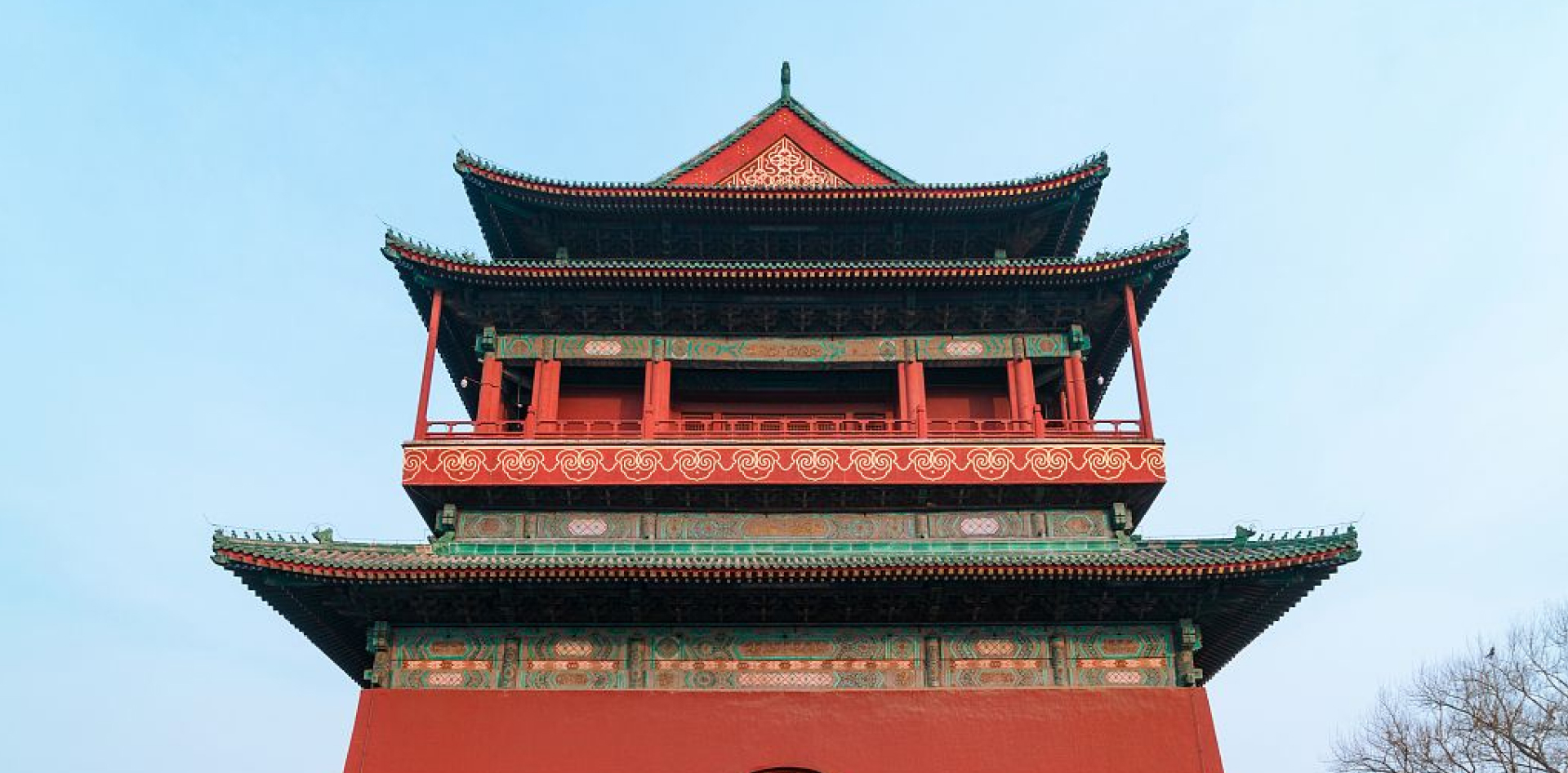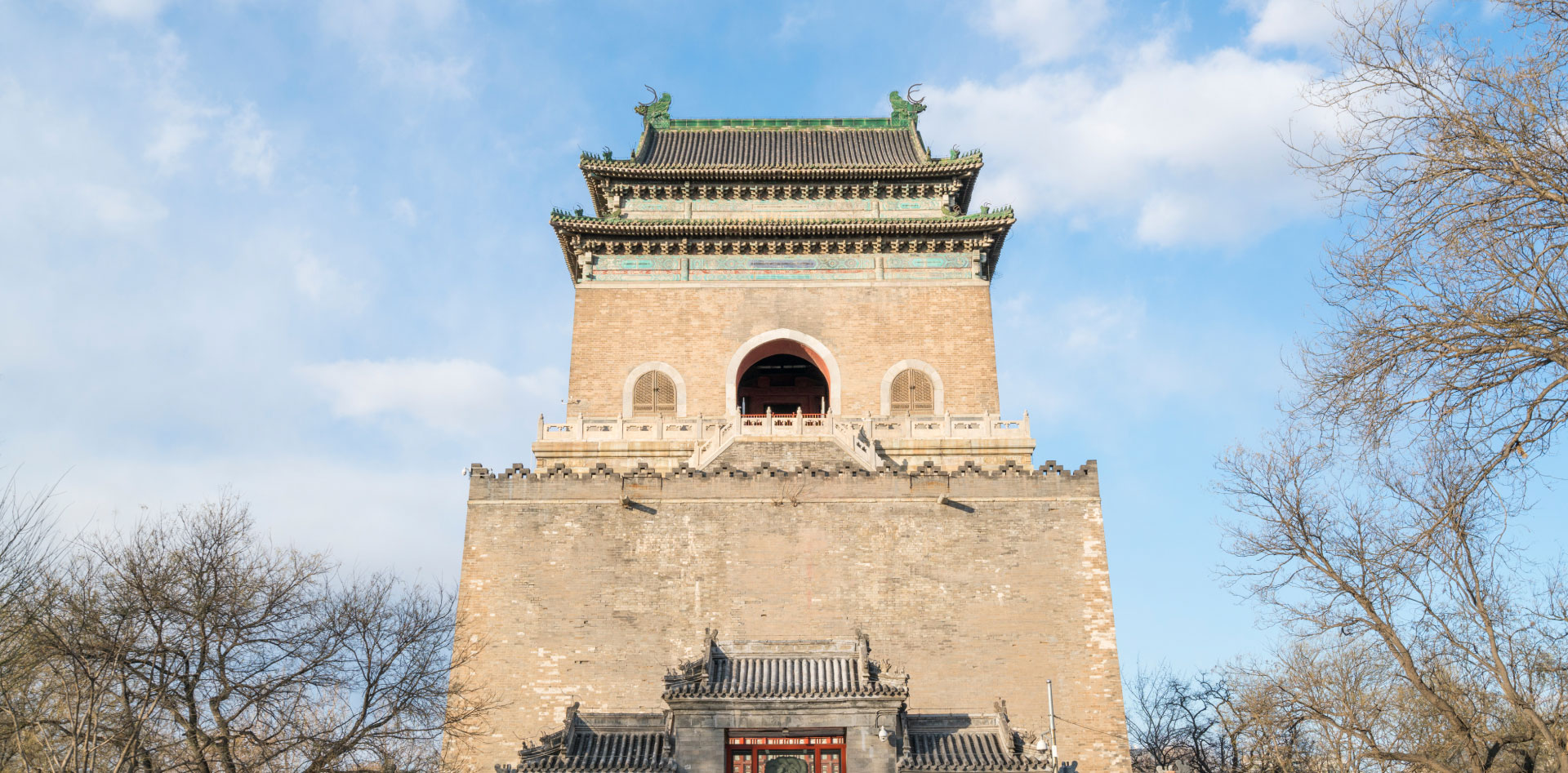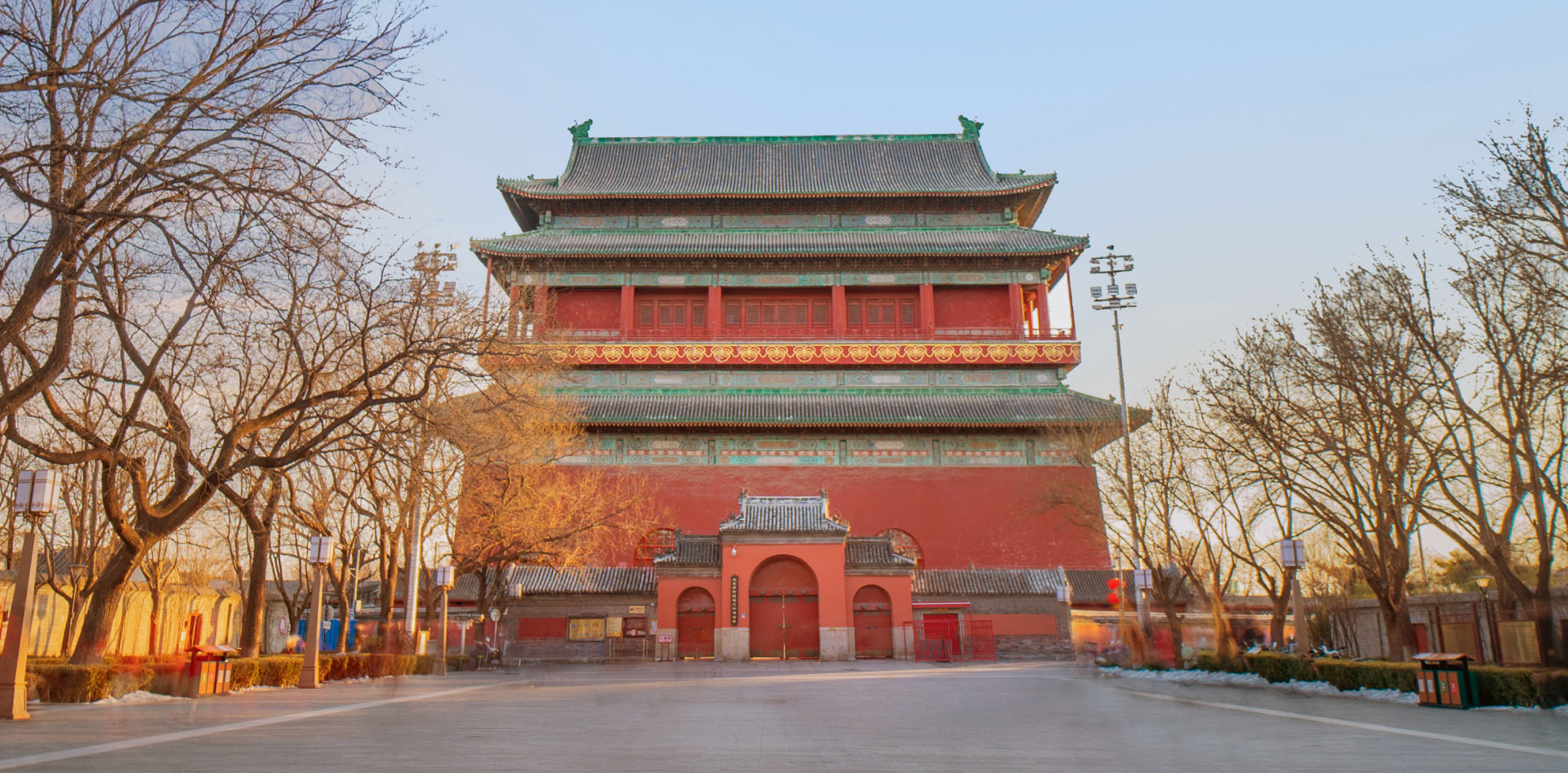


The Bell and Drum Towers are located on the northeast bank of Shichahai Lake, an area filled with prosperous commercial streets since the period of Dadu of the Yuan dynasty. The Bell Tower sits to the north, surrounded by walls that are arranged in a diamond shape. The Drum Tower sits to the south, also encircled by walls in the shape of a diamond. A rectangular square connects the two towers.

The Bell and Drum Towers stand tall in the traditional neighborhoods of Beijing. With their large volume and height, they are the most imposing structures in the old city's inner city area with commanding views over the northern section of Beijing Central Axis.
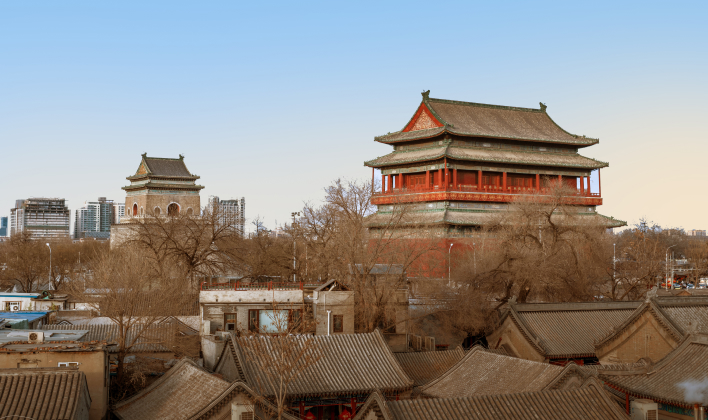
During the Ming and Qing dynasties, the emperors exercised their imperial authority to manage and control urban life with the Bell and Drum tolling every day. The Bell and Drum Towers stood tall in low-rise residential quarters. The sound reached as far as the four corners of the city due to the height of the buildings. The sound of the bell and drums unified time and told the hours to control the timing of opening and closing the city gates and markets. During the 20th century, the Bell and Drum Towers gradually became public education venues and scenic spots for tourists. Today, they are both open to the public as museums.
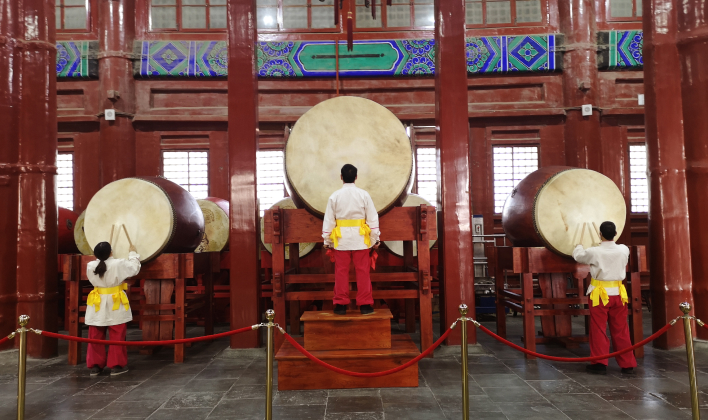
The Bell and Drum Towers were built in 1420, following the tradition of Dadu of the Yuan dynasty to tell the hour of the day with a bell tower and a drum tower in the city center. The Bell and Drum Towers were burned down several times over the centuries and the existing buildings were reconstructed in the Qing dynasty. In 1925, the Folk Education Hall of the Capital was established in the Drum Tower; the following year a cinema was opened in the Bell Tower. The Drum Tower has been open to the public as a museum since 1987 and the Bell Tower since 1989.